Blog
Rose Essential Oil Benefits for Skin: Geraniol & Citronellol

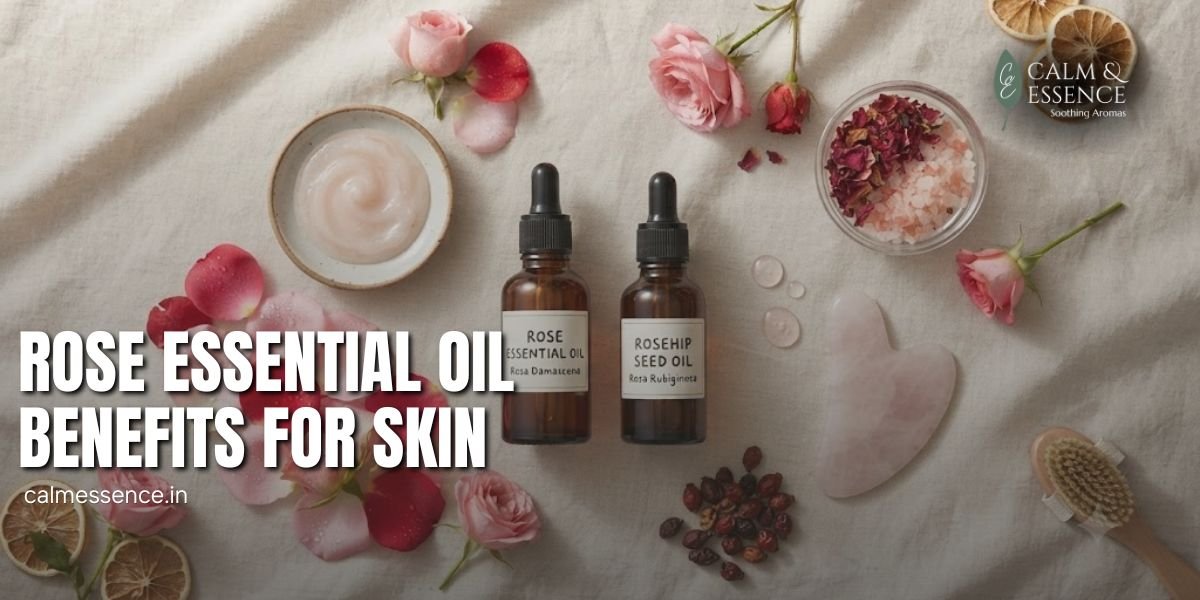
Pick up any bottle labelled “rose essential oil” at an Indian market stall and take a real sniff. Sharp. Slightly medicinal. None of that soft, honeyed warmth you get from fresh petals. That is not rose oil. Adulteration in this category is rampant, and most buyers never find out. But genuine Rosa damascena, distilled into rose otto the right way, is a different thing entirely. The rose essential oil benefits for skin are backed by actual science, not just centuries of poetic reputation, and understanding what is happening at the compound level changes how you buy it, use it, and what you expect from it.
What Makes Rosa Damascena Unlike Anything Else
Most essential oils have one or two active compounds doing the real work. Rosa damascena has over fifty identified ones. The two that matter most for skin are geraniol and citronellol, monoterpenoid alcohols that give the oil its scent and drive most of its therapeutic activity. A PubMed-indexed study showed both compounds activate PPAR receptors in skin cells, which suppresses COX-2 expression. COX-2 is a key marker of chronic skin inflammation. This is the same receptor pathway some pharmaceutical anti-inflammatory treatments target.
Citronellol has antiseptic properties that reduce bacterial load without touching the skin’s lipid barrier. Geraniol does something more interesting. A 2024 study in Frontiers in Pharmacology confirmed that Rosa damascena essential oil inhibits tyrosinase, the enzyme that signals melanin overproduction. In tested skin cells, melanin content dropped measurably.
For Indian skin, specifically Fitzpatrick types III through V, that finding is significant. These skin types produce more melanin as a protective response. Any breakout, sunburn, or irritation leaves a dark mark that takes months to fade. An ingredient that targets tyrosinase at the source, not just bleaches the surface, is addressing the actual problem. Most competitor blogs write “antioxidants” and move on. The geraniol-tyrosinase connection is where the real conversation is.
What Kannauj Got Right Four Hundred Years Before Skincare Science Did
A Persian physician named Avicenna developed the first documented rose steam distillation in the Middle Ages. That technology moved through Persia, into Mughal India, and settled in Kannauj, Uttar Pradesh, where it has run continuously for over four hundred years. Kannauj is called the Grasse of the East for this reason. Noorjahan, the wife of Emperor Jahangir, reportedly discovered rose attar while bathing in rose-petal water. The gulab jal left over from that process became a daily skin ritual across Indian homes, centuries before any Western brand called the same thing a toner.
Modern science confirms the tradition had it right. Rose hydrosol carries trace volatile compounds from the distillation, including small amounts of geraniol and citronellol. Not as potent as the oil, but consistent daily use as a face mist genuinely introduces these compounds to the skin. For anyone new to rose oil or watching costs, a pure Kannauj-sourced hydrosol used daily, plus diluted rose otto a few nights a week, is a smarter entry than one expensive bottle used incorrectly.
Worth mentioning separately: rose oil for dry skin has a specific use case in Indian winters, particularly in the north. Cold air pulls moisture out faster than most creams can replace it. Rose otto is both emollient and hygroscopic. Applied over a hydrosol mist on slightly damp skin, it seals hydration in rather than just adding more on top.
My Experience With It (And the Mistake I Made First)
Honestly, the first bottle I bought was a waste of money. Picked it up from a local store, label said rose essential oil, price seemed reasonable. Used it for three weeks straight and noticed absolutely nothing. Turns out it was rose geranium that smelled close enough that I did not question it at the time.
When I finally got hold of verified rose otto and started using it properly, six drops in my night cream, applied over damp skin after a hydrosol mist, the difference showed up around week five. A stubborn dark mark near my cheek that had been sitting there since a bad breakout months ago started fading visibly. Not gone, but noticeably lighter.
One limitation I will be upfront about: the scent does not linger the way attar does. And if you are expecting overnight results, this is not that. It is slow, quiet, and consistent, which, honestly, is how most things that actually work tend to be.
How to Actually Use It (With the Recipe)
Start here: rose otto vs rose absolute. Rose otto comes from steam distillation and keeps the full compound profile intact: geraniol, citronellol, nerol, beta-damascenone, trace phenylethyl alcohol. Rose absolute uses solvent extraction. Richer fragrance, yes, but a different compound ratio and less therapeutic potency for skin. For skincare, rose otto is the one worth spending on.
Now, the part Indian buyers specifically need to know. Rose geranium vs rose oil is not a small distinction in local markets. Rose geranium, from Pelargonium graveolens, smells similar enough to rose that sellers routinely pass it off as the real thing at a fraction of the cost. It is not a substitute. Its citronellol content is high, around 45%, but nerol, beta-damascenone, and the compound complexity of genuine Rosa damascena are missing. On any product label, look for ROSA DAMASCENA FLOWER OIL in the INCI list. No GC-MS certificate from the supplier means no way to verify species origin, and that matters.
The rose oil face cream recipe that actually works: 6 drops of verified rose otto into 30ml of unscented jojoba-based cream. Apply at night over a rose hydrosol mist while skin is still slightly damp. Damp skin has temporarily increased permeability. That window is when the active compounds absorb rather than sit on the surface. For targeted rose oil for hyperpigmentation: a 2% dilution on a cotton round, directly on dark spots, every night. Six to eight weeks minimum before you judge results.
Why It Probably Did Nothing the Last Time You Tried It
Undiluted on dry skin is the most common way people waste good rose oil. At a 1 to 2% dilution, the compounds move through the lipid barrier correctly. Applied straight or over a dry face, they largely do not. The second mistake is using a product that was never Rosa damascena to begin with.
One honest thing to say: rose essential oil is not a clinical treatment. Severe melasma, deep acne scarring, or persistent hyperpigmentation needs a dermatologist. Rose oil works best when supporting a proper routine, not replacing it. Also, if you use it during the day, wear SPF. Rose oil can increase photosensitivity, and sun exposure will undo the pigmentation work faster than the oil can do it.
5 Common Questions About Rose Essential Oil
Can I use rose essential oil on my face daily?
Yes, at 1% dilution in a carrier oil or cream, nightly use is safe for most skin types.
Is it suitable for oily or acne-prone skin?
Rose otto is non-comedogenic, and its antibacterial compounds target acne-causing bacteria, so yes, in small amounts with a light carrier.
What is the difference between pharmacy rose water and actual hydrosol?
Pharmacy rose water is usually a synthetic fragrance and water; real hydrosol is a distillation byproduct containing trace active compounds from Rosa damascena.
How long before I see results for hyperpigmentation?
Six to eight weeks of consistent nightly application at 2% dilution is the realistic minimum for visible change on post-inflammatory dark marks.
Why is genuine rose otto so expensive?
Two tonnes of Rosa damascena petals produce roughly one kilogram of oil, hand-harvested before sunrise and distilled the same day. The yield-to-labour ratio makes the price what it is.
Final Word
Rose essential oil has a strong scientific case behind it, and Indian skin specifically has more to gain from it than most skincare conversations acknowledge. The tyrosinase inhibition, the anti-inflammatory mechanism, the Kannauj heritage connecting a four-hundred-year tradition to what extraction science now confirms, none of that is marketing. What determines whether it actually works for you is sourcing it correctly, diluting it properly, and giving it enough time to do what it does at a biological pace. Browse the Rosa damascena range at callmessence. The hydrosols, rose otto blends, and formulations there are built with South Asian skin in mind, not repurposed from a Bulgarian or French skincare brief.