Blog
DIY Aromatherapy: How to Make Essential Oils at Home

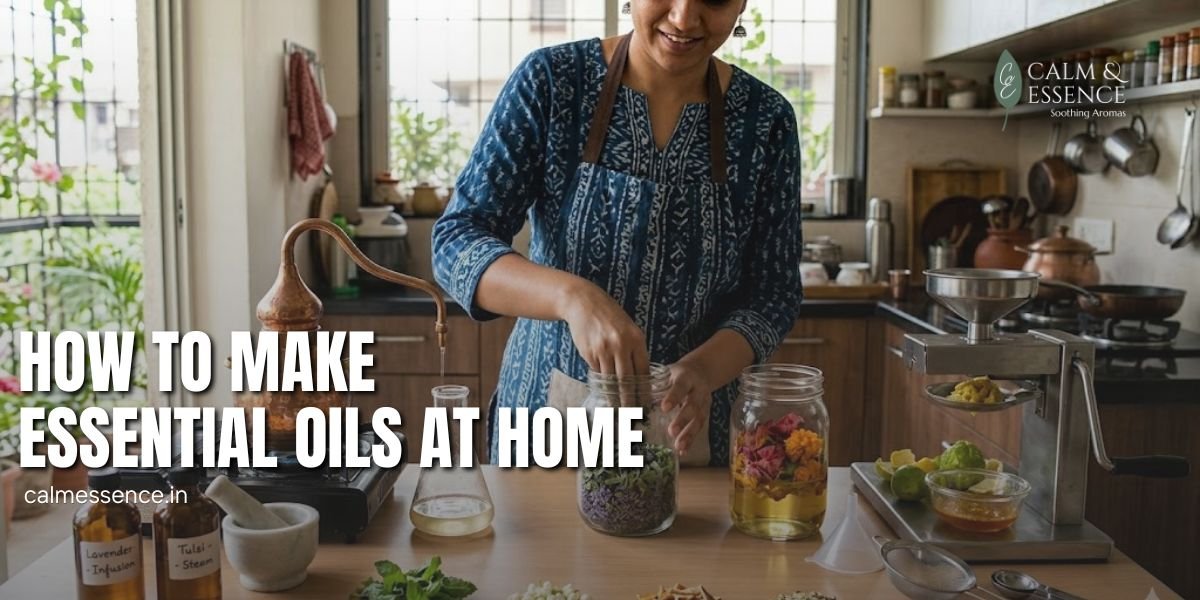
Most people who search for how to make essential oils at home are picturing something like this: a pot of lavender simmering on the stove, fragrant oil collecting in a glass jar, the whole kitchen smelling incredible. That version exists sort of. But what most tutorials skip telling you upfront is that true essential oil extraction and a fragrant oil infusion are two completely different things, and understanding that gap matters before you spend money on equipment or strip your balcony herb garden bare.
This guide covers both: what genuine extraction actually involves, what is realistically achievable in a home kitchen setup, and where the honest limits are. No false promises about filling bottles from a rooftop garden in Mumbai, but no reason to be discouraged either. Done with the right method and realistic expectations, home distillation is genuinely satisfying.
What This Guide Covers: The three main methods of home essential oil extraction (steam distillation, cold pressing, and carrier oil infusion), step-by-step instructions for each, yield data for common Indian plants, storage guidance, and an honest comparison of home-made versus commercially distilled oils.
The Distinction Most Tutorials Never Mention
Search for essential oil DIY tutorials and you will find two very different processes described under the same name.
The first is true essential oil extraction steam distillation, hydrodistillation, or cold pressing for citrus fruits. These methods produce actual concentrated volatile compounds from plant biomass. This is chemistry. It requires either a proper apparatus or a carefully built home setup, and the yield is small.
The second is an infused oil: plant material soaked in a carrier oil over days or weeks, which slowly absorbs some aromatic compounds and a fraction of the plant’s properties. It smells good. It works well in skincare and massage. But it is not an essential oil. The chemical profile is completely different, and the potency is not comparable.
Most “how to make essential oils at home” content online is actually describing infused oils. That is not wrong infused oils are useful but labelling them essential oils sets the wrong expectations. This guide covers all three methods and names each one correctly.
Method 1: Steam Distillation at Home
Steam distillation is how the majority of the world’s essential oils are produced commercially. A scaled-down version works at home with the right equipment, and for Indian households, some of the best plants for this lemongrass, tulsi, vetiver are either cheap to buy or easy to grow.
How It Works
Plant material is loaded into a chamber. Steam passes through it, causing the volatile aromatic compounds to evaporate from the plant. That steam-plus-oil vapour travels through a condenser a tube cooled by surrounding water where it cools back into liquid. At the collection end, you get two layers: essential oil floating on top and hydrosol below. Since oil is less dense than water, they separate naturally. A pipette or small separatory funnel lifts the oil off.
What Equipment You Actually Need
The pot-and-bowl method most blogs describe plant material in a bowl inside a pot, covered with an upside-down lid packed with ice is a functional starting point. It works for producing hydrosol and very small amounts of oil, and it costs nothing if you already have the right pots at home.
For anything more consistent, a Clevenger apparatus is the right tool. It is a glass distillation setup specifically designed for essential oil extraction, available from laboratory supply stores and chemistry suppliers online in India for roughly ₹2,500 to ₹8,000 depending on size. The Clevenger design includes a graduated collection trap that makes separating oil from hydrosol straightforward rather than fiddly.
Hydrodistillation is worth understanding separately. In steam distillation, steam passes through plant material without the plant touching water directly. In hydrodistillation, the plant is submerged in the water being heated. The output is similar, but the compound profile can differ slightly. Hydrodistillation suits denser materials like roots and seeds. Steam distillation preserves more of the delicate top notes in flowers and fresh leaves.
Step-by-Step Home Steam Distillation
Step 1 — Harvest at the right time. Cut your plant material in the morning, before the heat of the day peaks. Volatile compound concentration in most aromatic plants is highest in the early hours. Tulsi, lemongrass, and rose petals all have measurably higher aromatic compound levels before 10 a.m. This is not folklore; the research is consistent on it.
Step 2 — Load loosely. Pack plant material loosely into the distillation chamber. If packed too tightly, the steam cannot move through it properly and you lose yield.
Step 3 — Heat slowly. Fill the water reservoir and bring it to a steady, gentle boil rather than a rolling one. Sudden high heat produces uneven steam pressure. Keep condenser water cool throughout if it warms up, vapour does not condense properly and oil sticks to the coil walls instead of collecting in the trap.
Step 4 — Run until separation stops. Let the distillation run until the collected liquid shows no more oil separation. For most home batches, this takes one to two hours.
Step 5 — Wait before separating. Allow the collection to settle for at least 12 hours before attempting to pipette the oil off. Rushing this step mixes the layers and you lose oil.
Method 2: Cold Pressing at Home
Cold pressing also called expression is only relevant for citrus fruits. Lemon, orange, lime, grapefruit, bergamot. The oil lives in tiny sacs inside the rind, not the flesh, and mechanical pressure ruptures those sacs and releases it. Commercially this is done with industrial rollers. At home, it is more manual.
Wash and dry the fruit thoroughly. Zest only the coloured outer rind the white pith has no oil content and will make the final liquid bitter if used in any food application. Collect the zest in a piece of muslin and press firmly over a glass bowl. What comes out is a mix of juice, water, and essential oil. Let it settle for several hours in the refrigerator. The oil rises to the surface where it can be pipetted off.
The yield is genuinely small. Roughly 45 to 50 large oranges produce approximately 15ml of oil which gives you a realistic picture of the effort involved.
Cold pressing is worth doing to understand the process and for small personal batches, not as a regular supply method.
One important note: Cold-pressed citrus oils retain the furanocoumarins that cause photosensitivity on skin. Commercially produced steam-distilled citrus oils sometimes have these removed. Home cold-pressed versions do not. Apply SPF if you use homemade lemon or bergamot oil before stepping outside.
Method 3: Carrier Oil Infusion
This is the easiest method and the most accessible for beginners, but it produces infused oil not essential oil. The distinction matters and is worth being clear about.
How it works: Pack a clean glass jar with fresh or dried plant material rose petals, tulsi leaves, lavender if you can source it, marigold. Pour a carrier oil over it completely, making sure no plant material is exposed above the surface. Seal the jar and either leave it on a sunny windowsill for two to four weeks (the solar infusion method) or place the jar in a pot of warm water and gently heat it for four to eight hours (the stovetop method).
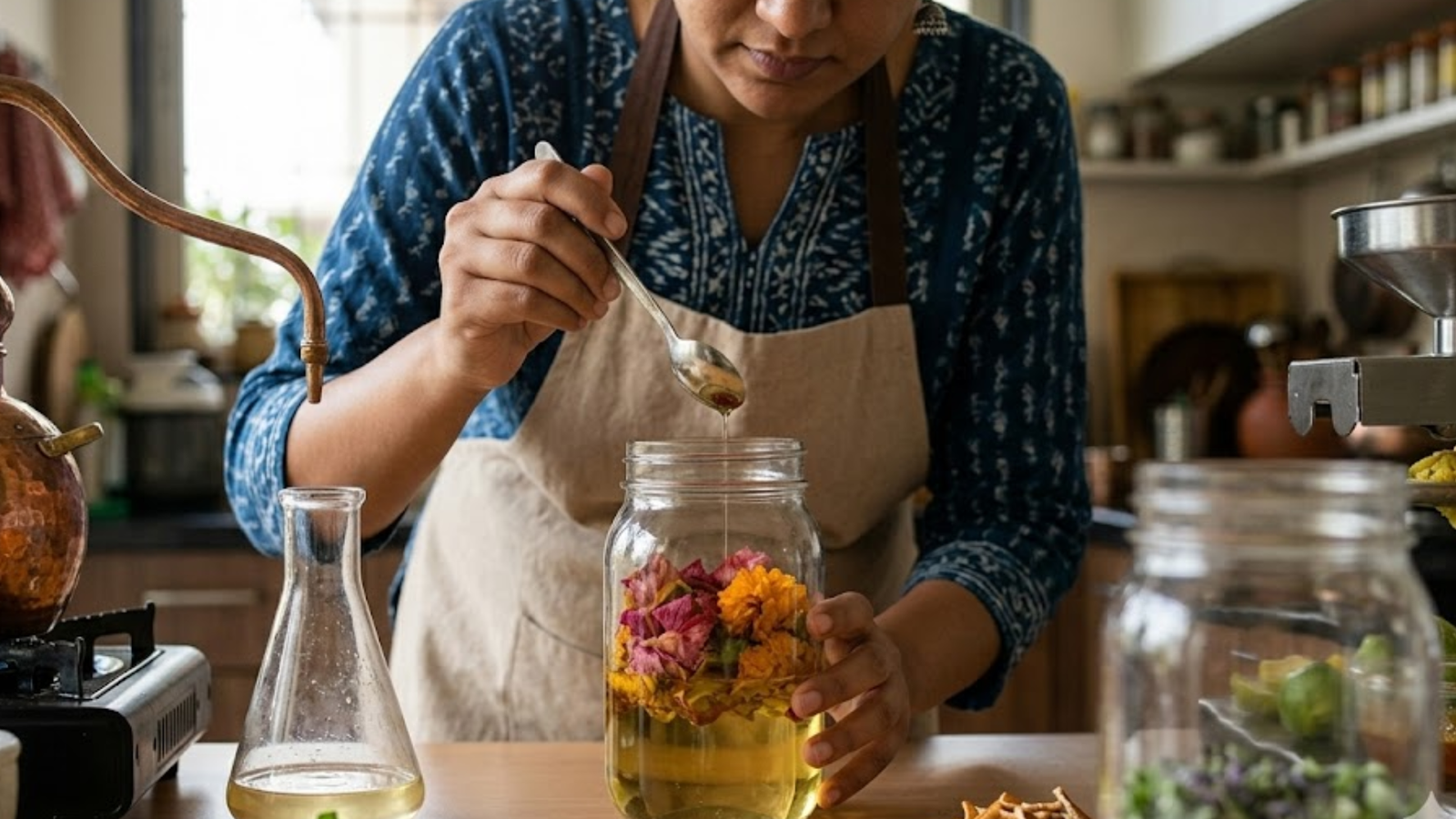
Strain out the plant material through muslin, press out every last drop, and store the oil in dark glass.
The result is a lightly aromatic oil that carries some of the plant’s properties and smells genuinely pleasant. It is excellent for skincare, massage, and hair care. What it is not and this is the part most tutorials blur is a concentrated essential oil. If you are making it for personal use with realistic expectations, it is a very worthwhile process.
A Safety Note Before You Start
This section matters more than most guides acknowledge.
Never apply any home-distilled or home-infused oil undiluted to skin. Concentrated aromatic compounds cause irritation, and some cause sensitisation meaning the more often you are exposed, the worse the reaction gets over time.
Always dilute in a carrier oil before skin application. For adults, 2% to 3% is a safe general ratio (roughly 12 drops of essential oil per 30ml of carrier oil). Keep all concentrated oils away from children and pets. Store away from heat, light, and anything flammable. Some plants that seem harmless cinnamon bark, clove, oregano produce oils that are genuinely caustic at full concentration. If you are unsure about a plant, research it specifically before distilling.
The International Federation of Aromatherapists publishes safety guidelines for essential oil use that are worth bookmarking if you plan to do this regularly.
My First Attempt: What Actually Happened
The first time I tried home distillation, I used a pot-and-bowl setup with a batch of lemongrass from a local sabzi mandi about 400 grams of fresh stalks and leaves. Lemongrass is one of the higher-yielding plants for home distillation, which is true comparatively, so it seemed like the right starting point.
After nearly two hours of distillation, I had collected about 180ml of fragrant liquid. The oil layer on top was perhaps half a millimetre thick. I am not exaggerating.
That tiny amount was genuinely potent properly sharp and citrusy in a way that most commercial oils I had bought did not match but the quantity was humbling. What I had not prepared for was how much plant material the process consumes. The 400 grams of lemongrass I started with looked like a lot sitting on the counter. After distillation, it had compressed into a spent, exhausted heap.
The hydrosol was lovely. I used it as a room spray for weeks. But the actual oil barely filled a sample vial.
That experience recalibrated everything. I stopped thinking about home distillation as a supply method and started treating it as a process something worth doing for the understanding of it, for the hydrosol, for the occasional small personal batch. That shift made it genuinely enjoyable rather than frustrating.
When I want a reliable reference point for what a properly distilled oil should smell like, I reach for a quality single essential oil before starting a new home batch. Comparing the two teaches you more in five minutes than most guides do in five pages.
The Yield Reality: What to Actually Expect
Yield percentage is the number nobody wants to lead with. Here is what commercial distillation produces from one kilogram of plant material a realistic baseline for home batches:
- Lemongrass: 0.5% to 1.2% among the best yields for home attempts
- Eucalyptus leaves: 0.5% to 3.5% depending on species
- Tulsi (Holy Basil): 0.1% to 0.3% mostly hydrosol output, very low oil
- Mint: 0.5% to 1% from fresh leaves
- Rose petals: 0.02% to 0.05% this is why genuine rose otto costs what it does
- Vetiver root: 0.3% to 2% but requires long distillation runs of 15 to 18 hours for full yield
What this means practically: 500 grams of lemongrass at a 1% yield gives you 5ml of essential oil on a good day. Rose petals at 500 grams will produce a fraction of a drop of actual oil. The hydrosol will be beautiful. The oil is for personal use only.
Best Indian Plants for Home Extraction
Some plants make far more sense than others for a home setup, specifically in an Indian context where availability and cost matter.
Lemongrass is the most practical starting point. It grows easily across India, is available cheaply at most sabzi mandis, and produces hydrosol that is genuinely useful as a skin toner and room spray even when the oil collection is minimal.
Tulsi produces low oil yield but deeply aromatic hydrosol. The eugenol-rich steam is worth capturing even if the oil layer is thin. Excellent for room sprays and linen water.
Fresh rose petals are impractical as an oil source at home but produce something close to commercial rose hydrosol when done correctly. Use Desi gulab if you can find it the fragrance compounds are significantly richer than those of hybrid tea roses sold in most flower markets.
Vetiver root is worth attempting if you have access to dried Rajasthan or Bihar root. The distillation runs long, and the oil is thick and heavy, but even small yields are highly concentrated. The hydrosol smells extraordinary and is unlike anything available commercially at the same price.
What About Jasmine and Marigold?
These require either enfleurage an old French method using fat to absorb fragrance or solvent extraction, neither of which is practical in a basic home setup. Steam distillation of jasmine destroys most of the delicate top notes. For these flowers, carrier oil infusion is the more appropriate home method.
Storage: Where Most Home Batches Go Wrong
Home-distilled essential oils have no commercial stabilisers. They oxidise faster than store-bought versions. Take this seriously, or months of effort will produce oil that degrades in weeks.
Store in dark amber or cobalt glass never clear glass, never plastic. Keep in a cool place away from light and heat fluctuation. A closed drawer or a small dedicated box works well. Label every bottle with the plant name, batch date, and method used.
Most home-distilled oils remain stable for 6 to 12 months if stored correctly. Citrus oils go faster 4 to 6 months before noticeable oxidation sets in. Root oils like vetiver last longer, sometimes up to two years, because their heavier sesquiterpene content is more resistant to oxidation.
Smell the oil every few months. Trust your nose it is the most reliable quality check you have. Oxidised oil smells flat, slightly harsh, or loses the characteristic top notes that made it interesting in the first place. Once that happens, the therapeutic value has largely gone even if the oil still smells of something.
FAQs
Is homemade essential oil the same as an infused oil?
No. Infused oils are plant material soaked in carrier oil and are far less concentrated. True essential oils require distillation or cold pressing to extract volatile compounds from plant biomass. The two have completely different chemical profiles and different applications.
What is the easiest plant to start with for home steam distillation?
Lemongrass. It has one of the higher yield percentages, grows cheaply across India, and produces useful hydrosol even when the oil collection is minimal. It is also forgiving if your setup is not perfect.
How much plant material do I need to produce usable oil?
At least 500 grams for a meaningful home batch. Expect 3 to 6ml of oil from a good lemongrass run. Flowers will give you significantly less focus on the hydrosol from those.
What is a Clevenger apparatus, and do I need one?
It is a glass distillation setup specifically designed for essential oil separation. Not mandatory, but considerably more effective than pot-and-bowl methods for anyone doing regular home distillation. Available from Indian chemistry suppliers online for ₹2,500 to ₹8,000.
How long does homemade essential oil last?
6 to 12 months stored in dark glass away from heat. Citrus oils degrade faster at 4 to 6 months. Root oils like vetiver can hold for up to two years.
Can I use homemade essential oil in a diffuser?
Yes, if it is a true distilled oil. Use the same drops you would with a commercial oil start with 4 to 6 drops and adjust. Do not put carrier oil infusions into a diffuser; the carrier oil can damage the mechanism and does not diffuse the same way. If you want a ready-to-use diffuser oil without the extraction process, our essential oil blends are pre-formulated for exactly that.
Final Word
Home distillation is one of those processes where actually doing it teaches you more about essential oils than any amount of reading. Understanding why rose otto costs what it does stops being abstract once you have spent two hours distilling petals and collected a film of oil thinner than paint.
The yield reality is humbling, and worth knowing before you start not to discourage the attempt but to frame it correctly. The hydrosol alone from most home batches is worth the effort. The occasional small batch of lemongrass or tulsi oil, made from plants you chose and processed yourself, has a quality and a personal connection that no commercial bottle replicates.
And if the process has you curious about what a properly distilled oil is supposed to smell and feel like, browse our single essential oils each one sourced and distilled to a standard that makes for a useful benchmark against your home batches.
Also worth reading: Eucalyptus Oil for Sinus Relief and Congestion and Cedarwood Oil: Natural Stress and Muscle Relief if you are building out a home essential oil kit and want to understand what each oil actually does before you commit to distilling it yourself.