Blog
Essential Oils for Anxiety: What Actually Works and Why

Some days the anxiety is obvious heart racing, breath shallow, mind running scenarios on a loop. Other times it’s that low background hum, the kind that doesn’t feel dramatic enough to name but sits behind everything you do. Either way, most people dealing with it want something they can actually reach for in the moment, not just manage through willpower alone.
Essential oils for anxiety aren’t a cure, and nobody serious is claiming they are. But there’s documented biology behind why certain ones work, and understanding that biology changes how you use them and what you actually get out of them.
Why Inhaling an Oil Can Change How Your Brain Feels
This is the part most articles skip straight past. When you inhale an essential oil, the aromatic molecules travel through the nasal cavity and make contact with the olfactory nerve. That nerve has a direct line to the limbic system the brain region that handles emotional processing, memory, fear response, and stress regulation. No long detour. No slow absorption through the bloodstream first. The signal arrives fast, which is why the effect of inhaling something calming feels almost immediate.
Two things happen in the limbic system that matter for anxiety:
Cortisol regulation: Several aromatic compounds have been shown in clinical settings to reduce cortisol, the body’s primary stress hormone, when inhaled consistently.
GABA receptor modulation: Linalool, the active compound in lavender, has documented interaction with GABA-A receptors. GABA is the nervous system’s natural off-switch. Drugs like benzodiazepines work on this same receptor system. Linalool does it more gently, without the dependency risk, but through the same biological doorway.
That’s why lavender has been called anxiolytic in peer-reviewed literature — it’s not just pleasant, it’s pharmacologically active through inhalation. A clinical aromatherapy trial involving 62 pre-surgery patients found measurable cortisol reduction and lower anxiety scores in those who inhaled lavender versus controls. These weren’t relaxed people to begin with.
For a deeper look at how the olfactory system processes aromatic compounds, this overview from the National Library of Medicine explains the pathway clearly.
My Experience With Essential Oils for Stress
Honestly, I came to essential oils skeptically. Felt like something people burned in the background at spas, not something that could do anything real.
The first time I actually tested it properly was during a stretch of bad work stress the kind where your brain doesn’t switch off even after you’ve stopped working. I started diffusing lavender and bergamot together at night, maybe 45 minutes before bed. Took about a week of consistent use before I noticed anything. The change wasn’t dramatic. I just stopped lying awake replaying things. Sleep came faster. Woke up feeling less behind.
The honest part: on genuinely high-anxiety days, oils alone weren’t enough. But as a nightly reset routine, they made a real difference to how I ended each day. That’s probably the most accurate framing — not a fix, but a reliable wind-down tool that actually works if you give it enough time.
The Oils Worth Actually Using
Lavender — the one with the most research behind it
Lavender essential oil (Lavandula angustifolia) is the most studied essential oil for anxiety in clinical settings, and the research holds up better than most. Linalool and linalyl acetate are its two primary active compounds. Both interact with the nervous system in measurable ways. Linalool specifically modulates GABA-A receptors, which explains why consistent lavender inhalation produces genuine calm rather than just masking the feeling.
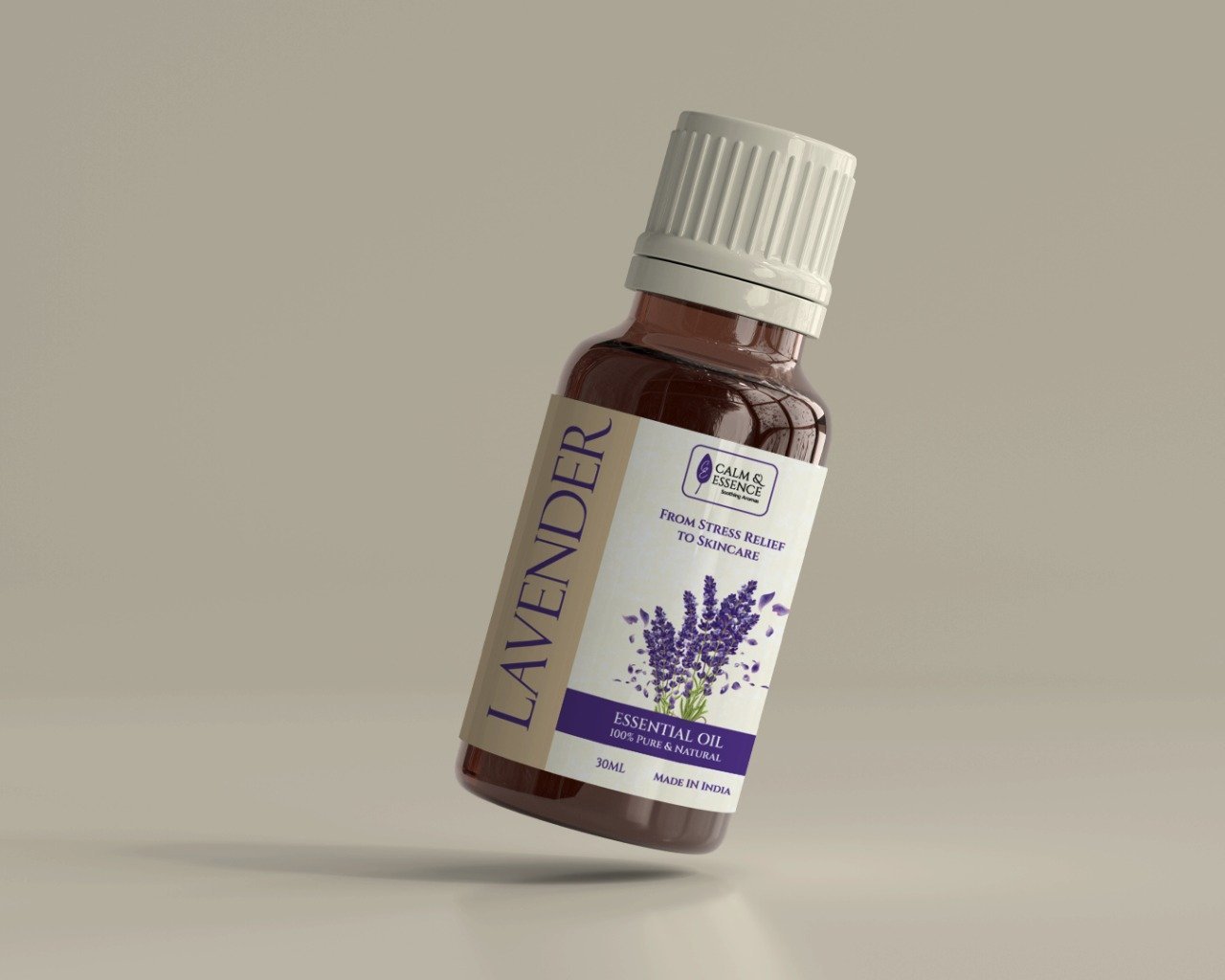
Lavender essential oil
Best for: chronic background anxiety, sleep anxiety, general end-of-day decompression. Works well diffused at night. Also one of the few oils safe enough for most people, diluted and applied to the wrists or temples.
Bergamot — specifically for mood, not just relaxation
Bergamot oil anxiety research is more recent but compelling. Bergamot is cold-pressed from the rind of Citrus bergamia, and its primary active compound is limonene, which has documented anti-anxiety effects on the central nervous system. A 2020 study found it reduced anxiety in pre-surgical patients — a group under measurable acute stress.
It oxidizes faster than most essential oils, especially once opened. Old bergamot smells flat and off. If yours has been sitting for over a year, the limonene content has degraded and it won’t deliver the same effect.
It also causes photosensitivity. If applied topically, don’t go into direct sunlight for several hours. For Indian summers especially, this matters.
Best for: low mood alongside anxiety, daytime use in a diffuser, morning routines when you need to feel more functional rather than sedated.
Ylang-Ylang — underrated for acute moments
Ylang-ylang (Cananga odorata) has a measurable effect on heart rate and blood pressure when inhaled. For moments when anxiety spikes into something more physical — a racing heart, a tight chest — a few slow nasal breaths over a drop of ylang-ylang on a cotton pad can bring the physical symptoms down faster than most other oils.
The scent is strong and floral. Some people find it overwhelming in a diffuser. If that’s you, one drop on a tissue held near the nose during an acute moment is enough.
Roman Chamomile — for when anxiety is keeping you up
Not the same as chamomile tea, though they share a plant family. Roman chamomile essential oil (Chamaemelum nobile) has sedative properties that work on the central nervous system directly. It’s particularly good for the specific anxiety that shows up at night the mind that won’t quiet down when the body finally stops moving. Diffused in the bedroom about 30 minutes before sleep, it creates a noticeably different quality of rest.
No major contraindications, which makes it one of the more broadly usable oils on this list.
Two Diffuser Blends That Actually Work
Daytime blend — focus without sedation
- 3 drops bergamot
- 2 drops lavender
- 1 drop frankincense
Run for 30 to 45 minutes. Frankincense grounds the citrus brightness of bergamot so it doesn’t feel stimulating. The combination is calming without being sleepy, which matters if you still need to function.
If you’d rather skip measuring individual oils, browse our pre-made essential oil blends for ready-to-use options.
Night blend — sleep and anxiety release
- 3 drops lavender
- 2 drops Roman chamomile
- 2 drops ylang-ylang
Run 45 minutes before bed in a closed room. This blend is heavier not for daytime. The ylang-ylang alongside chamomile creates a sedative effect that helps genuine anxiety-driven insomnia, not just mild restlessness.
How You Inhale Matters as Much as What You Inhale
This is something most guides skip completely. Deep nasal breathing paired with essential oil inhalation delivers the aromatic compounds to the olfactory nerve more effectively than shallow breathing does. When you’re anxious, breathing is typically shallow and chest-focused. That pattern actively reduces how much of the oil reaches the receptor site.
If you’re using a cotton pad or direct inhalation method during an acute moment:
- Hold the oil about 5cm from the nose
- Inhale slowly and deeply through the nose for a count of 4
- Hold for 2 counts
- Exhale through the mouth for a count of 6
That longer exhale pattern activates the parasympathetic nervous system independently of the oil. The two effects together — the breathing pattern and the aromatic compound produce a faster response than either one alone.
What These Oils Won’t Do — and Why That Matters
Essential oils for stress relief work as a supportive tool within a larger routine. For people dealing with clinical anxiety disorders, panic disorder, or anything that significantly interferes with daily functioning, oils are an adjunct, not a treatment. They won’t replace therapy. They won’t replace medication where medication is genuinely needed.
What they will do, consistently used over time, is lower the ambient stress load, bring cortisol down gradually through daily use, create reliable sleep cues, and give you something to reach for in an acute moment that has a real biological mechanism behind it rather than just feeling like you’re doing something.
You can also read our post on cedarwood oil for natural stress and muscle relief if you’re looking to build out a broader calming routine.
FAQs
Which essential oil works fastest for anxiety?
Ylang-ylang, via direct inhalation. Its effect on heart rate and blood pressure is measurable within a few minutes of slow nasal breathing.
Can I apply essential oils directly to my skin for anxiety?
Always dilute first 2% in a carrier oil, about 4 drops per tablespoon — applied to wrists, temples, or behind the ears.
Is bergamot safe to use during the day?
Yes, in a diffuser. Avoid topical application before sun exposure as bergamot causes photosensitivity.
How long before a diffuser blend for anxiety starts working?
Most people feel a shift within 10 to 15 minutes of consistent inhalation in a closed room.
Can essential oils help during a panic attack?
Direct inhalation of ylang-ylang or lavender combined with slow nasal breathing can reduce physical symptoms. They work better as prevention than as an in-the-moment cure for severe episodes.
Final Word
The science behind essential oils for anxiety is more solid than the wellness industry’s marketing usually makes it sound and more limited than the overclaiming also makes it sound. The olfactory nerve to limbic system pathway is real. Linalool’s interaction with GABA-A receptors is documented. Cortisol reduction through consistent inhalation has clinical trial support. That’s a legitimate mechanism.
What it produces is a supportive, reliable, low-risk tool for managing daily stress and anxiety. Not a replacement for professional care, but something that genuinely earns its place in a daily routine.
Browse the anxiety and stress relief essential oils at Calm & Essence, blended specifically for the kind of pressure that Indian daily life actually delivers.